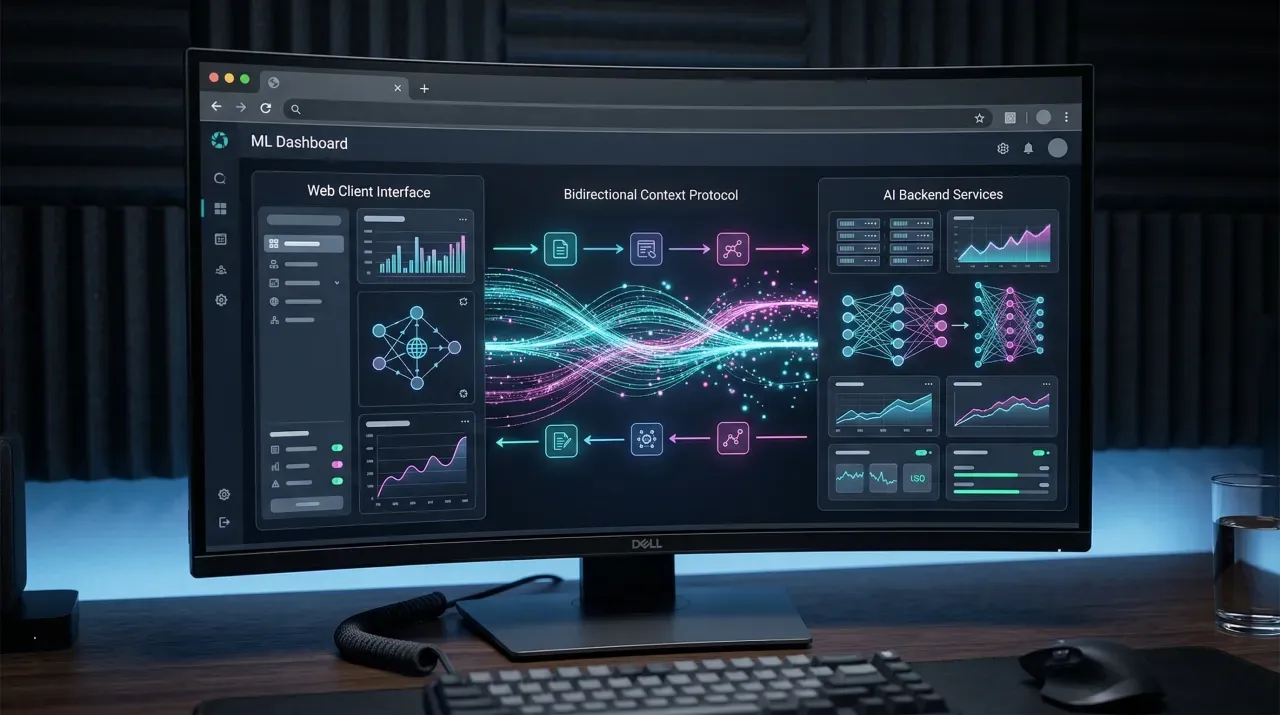
67% Lower Cost per Interaction
Agents invoke structured tools instead of processing HTML, drastically reducing token consumption and API costs.
WebMCP lets AI agents interact directly with your site's features — no scraping, no screenshots, no HTML interpretation
WebMCP is a W3C incubation protocol, co-developed by Google and Microsoft, that extends the Model Context Protocol to the browser. Instead of AI agents interpreting your HTML or taking screenshots, WebMCP lets your website publish a structured tool contract that agents invoke directly. The result: interactions that are 67% more token-efficient, faster responses, and reliable outcomes. Already available in Chrome 146 Canary.
Agents invoke structured tools instead of processing HTML, drastically reducing token consumption and API costs.
Agents get structured data from your site — they don't guess from rendered HTML. Fewer errors, higher reliability.
W3C incubation protocol with Google and Microsoft as co-authors. Future-proof infrastructure investment.
Browsers without WebMCP simply ignore the attributes — your site works exactly the same for regular users. Zero risk.
We analyze your site to identify forms, interactive tools, and data flows that AI agents could consume.
We define the names, descriptions, and parameters for each tool — both declarative (HTML forms) and imperative (JavaScript functions).
We add WebMCP attributes and register imperative tools with navigator.modelContext, verifying in Chrome Canary.
We validate that each tool responds correctly to agent invocations and deliver tool contract documentation.
MCP (Model Context Protocol) connects AI assistants to backend servers. WebMCP brings that same concept to the browser: it lets your website expose structured tools that AI agents can invoke directly from the browser tab, without needing a separate MCP server.
No. WebMCP uses progressive enhancement — browsers that don't support it simply ignore the extra attributes. Your site works exactly the same for all regular visitors. The attributes are only read by AI agents in compatible browsers.
WebMCP is available in Chrome 146 Canary as part of the W3C incubation program. Chrome stable and Edge are expected to adopt it in the coming quarters, since Google and Microsoft co-authored the specification.
According to tests reported by Forbes, WebMCP reduces computational overhead by approximately 67% compared to traditional HTML scraping. Agents receive structured data directly instead of processing and parsing the full page DOM.
Yes. Our website already implements WebMCP with 15 registered tools: contact forms, newsletter subscription, website audit, ROI and technical debt calculators, service navigation, and more. We use it as a real-world proof of concept.
The official Web Model Context Protocol specification is available at webmachinelearning.github.io/webmcp/. The repository is jointly maintained by engineers from Google and Microsoft under the W3C Web Machine Learning Working Group.
Fill out the form and an expert will contact you to discuss your needs