 www.iqsource.ai
 Mark Cuban: Data Centers Become Pickleball Courts
Ricardo Argüello, August 25, 2026

CEO & Founder
General summary
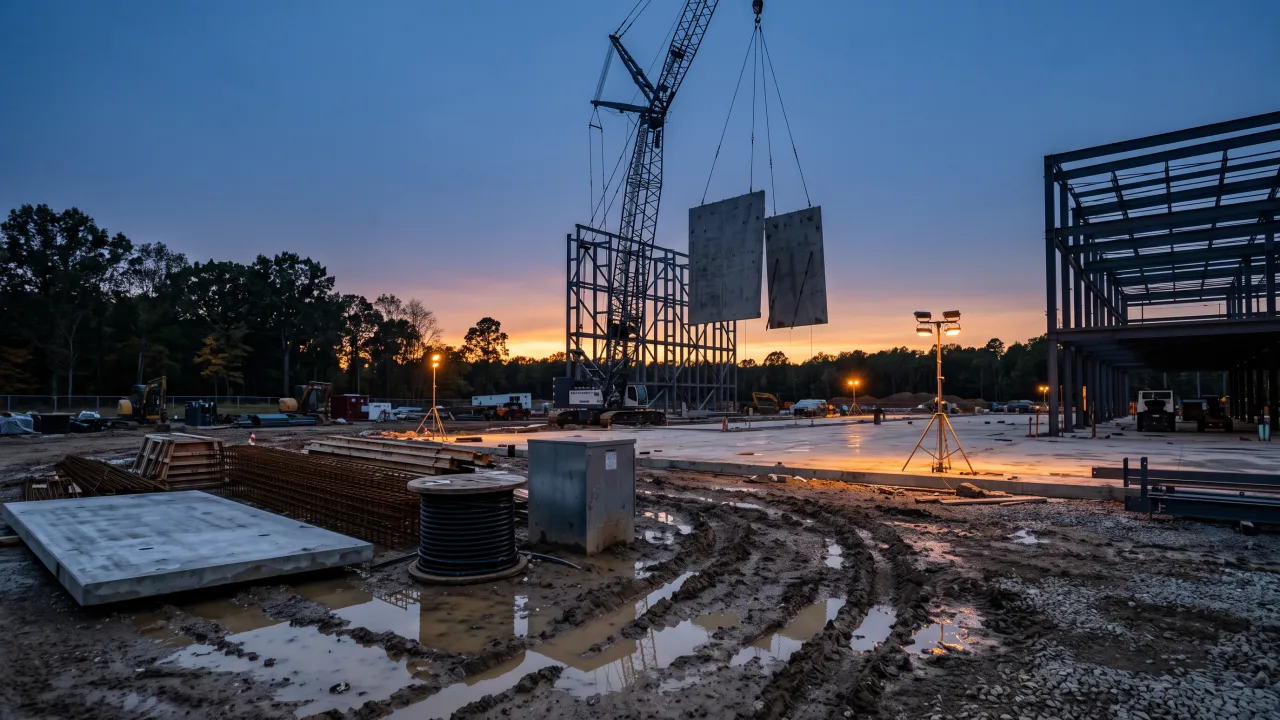
Mark Cuban told the All-In podcast that plenty of data centers will end up as pickleball courts, comparing the AI buildout to the late-1990s fiber overbuild. His concern is efficiency stranding capacity, not demand failing to show up. For a company buying AI rather than building it, both outcomes point to the same decision.
- Cuban's financing point: market leaders are spending all their cash flow on capex and borrowing on top of that, which he called planning for perfection
- Alphabet's Q2 2026 release shows $44.924 billion in purchases of property and equipment against $39.069 billion in operating cash flow, its first negative free cash flow quarter
- Alphabet raised $84.75 billion in equity in June 2026, the largest equity capital raise by a listed US company, with $10 billion anchored by Berkshire Hathaway
- S&P cut Oracle to BBB- on July 9, 2026, one notch above speculative grade, citing negative free cash flow and concentration in OpenAI
- After the fiber bust the capacity stayed in the ground and got cheap, and the companies built on top of it captured the value the builders lost
Imagine half a city decides to build highways at the same time, on debt. Maybe there are too many lanes and some builders go under. Your company isn't a builder, it moves trucks. Cheaper tolls are good for you. What decides how much you gain isn't the toll price, it's whether your routes and orders are already organized the day it drops.
AI-generated summary
There are two ways the AI infrastructure story ends, and if you buy AI rather than build it, they lead to the same instruction.
Suppose the spending turns out to be justified. Capacity gets used, prices grind down, you buy compute from a healthy vendor.
Suppose it turns out to be far too much. Capacity strands, somebody loses an enormous amount of money, and you buy compute from a frightened vendor.
Either way the price of capacity falls and you come out ahead. What decides how far ahead is not whether you called the cycle. It is what you had built on the day the price moved.
That is why the bubble debate, entertaining as it is, is a fight between the people who put up the money. Your fight is a different one, and it is decidable this week.
What Cuban actually argued
His argument is getting flattened into a punchline, so it is worth reading straight.
Speaking on the All-In podcast in July, Mark Cuban said a lot of data centers are going to be turned into pickleball courts. He was not saying nobody will use AI. He was saying efficiency arrives before the payback does.
The fiber comparison carries that. Carriers laid long-haul networks against a demand forecast, then connection speeds improved and the bandwidth shortage dissolved on the technology side rather than the customer side. Cuban expects the same price-performance curve in compute.
On the financing he was blunter. In that episode he noted that the market leaders are borrowing hundreds of billions, that private credit already has a problem, and that these companies are spending all their cash flow on capex and then borrowing on top of it. He called that planning for perfection.
That phrase is the one to keep. It does not claim the plan is wrong. It claims the plan has no room for error. The Motley Fool picked the comparison back up on August 20, which is how it landed in my feed again a month later.
One piece of the fiber story Cuban leaves out is the part I find most useful. When the builders went under, the glass did not disappear. It sat in the ground, cheap, and the companies that arrived afterward built on it. The money was lost exactly once, by whoever laid the cable.
The money changed shape this year
The 2026 numbers give the warning some weight, and they are better read at the source than in the coverage.
Alphabet’s second quarter release reports $39.069 billion of operating cash flow and $44.924 billion in purchases of property and equipment. Subtract, and it is negative. First time. That happened in a quarter where revenue grew 24% and Google Cloud grew 82%, so this is not a business in trouble. It is the size of the bet.
Quarterly capex came in at exactly double the prior year. Full-year guidance moved to $195 to $205 billion.
In June, the same company raised $84.75 billion of equity, the largest equity capital raise by a listed US company, with $10 billion anchored by Berkshire Hathaway.
On July 9, S&P cut Oracle to BBB-, one notch above speculative grade, pointing at negative free cash flow and the concentration of its order book in OpenAI.
Cuban’s own position is less tidy than the headlines make it, and the messy part is the one worth keeping. When Alphabet raised guidance and the market got nervous, he defended the spending, comparing it to 1998, when he bought every server and every bit of bandwidth he could find because he needed more than anyone else. And he got it.
So he is not calling the leaders wrong. He is saying the field in aggregate builds more than gets used, and the ones who break are the ones who financed it with borrowed money.
Back in April I wrote that Google’s capex read as quiet conviction rather than fear, and I still think that was right for April. What changed is where the money comes from. Cash gave way to capital markets, and capital markets attach a clock.
What survives an 80% price drop
Run the question that matters for your company. If compute costs fall 80% next year, which of your current assets is worth more and which is worth less?
Worth less: any advantage resting on a negotiated rate, a volume commitment, or having picked the right vendor early. A competitor with a credit card matches all of that in an afternoon.
Worth more: a process you have already mapped, exceptions included, approvals included, the weird cases written down. That does not get cheaper when compute gets cheaper. It gets more valuable, because suddenly it can run at a scale that did not pencil out before.
This is the same case I made in the runtime is a commodity and the workflow is the moat and again in the harness is the moat. An infrastructure overbuild does not weaken that argument. It speeds it up.
There is a trap on the other side of the discount, and we looked at it in why a spending cap treats the symptom. When unit price falls, consumption rises faster than the savings if the workflow is undefined. Cheap capacity rewards the company with a finished process and punishes the one with only a budget.
What I would do about it this week
None of this argues for pausing an AI project. It argues for choosing where you anchor one.
If your plan for next year depends on the price per token continuing to fall, you are making the same bet Cuban is criticizing the builders for making, with less information and no balance sheet to absorb being wrong.
If your plan depends on three of your own processes being better understood than your competitor’s, the price of compute stops being a strategic variable. It falls and you win faster. It rises and you win slower.
That decision belongs to you, not to Alphabet. The AI Maestro discovery is built around it: two months to establish how the work actually moves, ending in a Go or No-Go before any tooling budget is committed.
The rest of it will be argued on television for the next two years. Those of us who watched the fiber cycle already know how that part ends. Somebody builds on top of it.
Let’s decide where your advantage lives before the price movesFrequently Asked Questions
On the All-In podcast, Mark Cuban said many AI data centers will be turned into pickleball courts if models and hardware keep getting more efficient. He compared the buildout to the late-1990s fiber optic overbuild, when installed capacity ran far past what the market actually consumed.
Both are debt-financed capacity built against demand projections. The mechanism Cuban highlights is technical rather than commercial: in fiber, connection speeds improved and the bandwidth shortage disappeared. In AI, efficiency gains per token could strand capacity before the buildout pays for itself.
Alphabet's Q2 2026 release shows $44.924 billion in purchases of property and equipment against $39.069 billion in operating cash flow. AI infrastructure spending outran the cash the business generated, and the company raised full-year capex guidance to a range of $195 billion to $205 billion.
Anchor the advantage in your workflow instead of in the price of compute. If compute gets cheaper, the winner is whoever already has the process mapped and ready to absorb it. At IQ Source that is what the AI Maestro discovery is for, before any tooling budget gets committed.
Related Articles

The AI Question Your CEO Can't Ask
Cuban named the Innovator's AI Dilemma. His fix is right. But most CEOs can't even formulate the question his advice assumes they already know.
NVIDIA Guaranteed $105B of OpenAI's Lease Obligations
NVIDIA backstopped up to $105B of OpenAI's Ohio lease. It only pays if OpenAI fails, and it terminates the moment OpenAI earns a credit rating.

The US Needs 500,000 Electricians to Build AI
Meta says the US needs 500,000 electricians for AI infrastructure. Ford, Google, BlackRock, and Carhartt already put $450 million behind the problem.