
WORDMEND CLARITY
For the words that are there and will not come
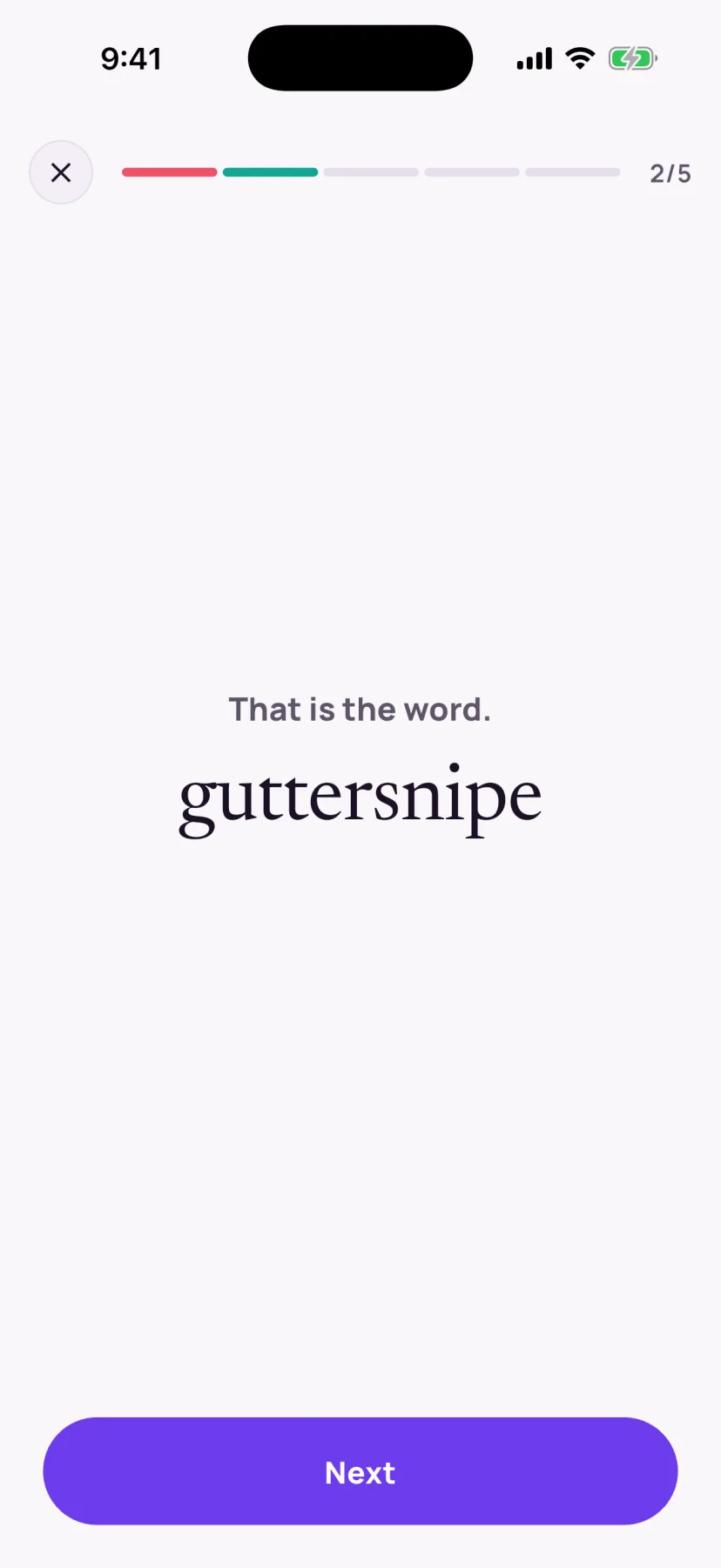
Language practice for women whose recall varies from one day to the next. English and Spanish, with more than 37,000 professional words in each.
For iPhone, iPad and Mac. On Mac it needs macOS 12 Monterey or later. In the App Store it is listed as WordMend: Brain Fog Words.
One session, start to finish
Scroll slowly — the phone screen moves with you.
- 01
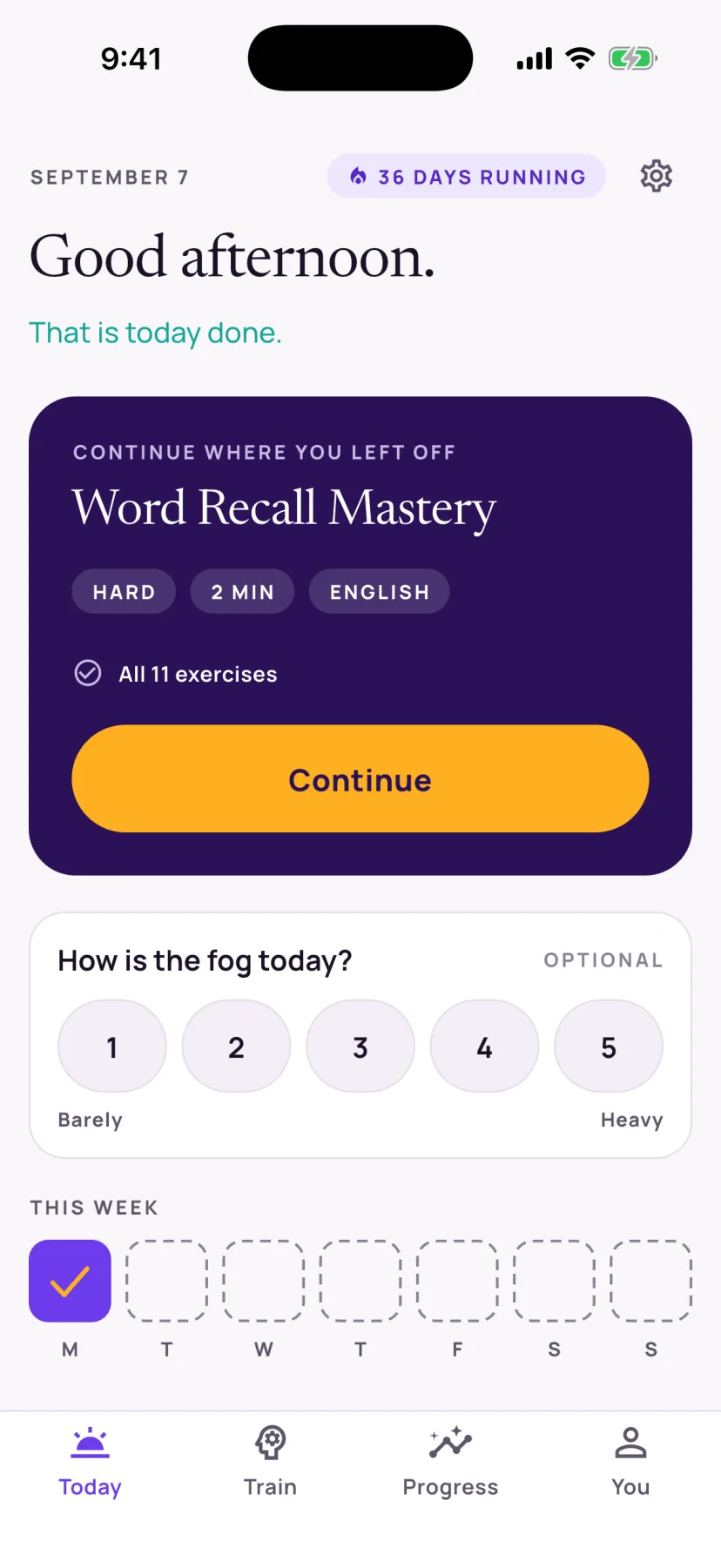
You pick up where you left off
The day opens with one thing pending. Yesterday's half-finished session is waiting right there.
- 02
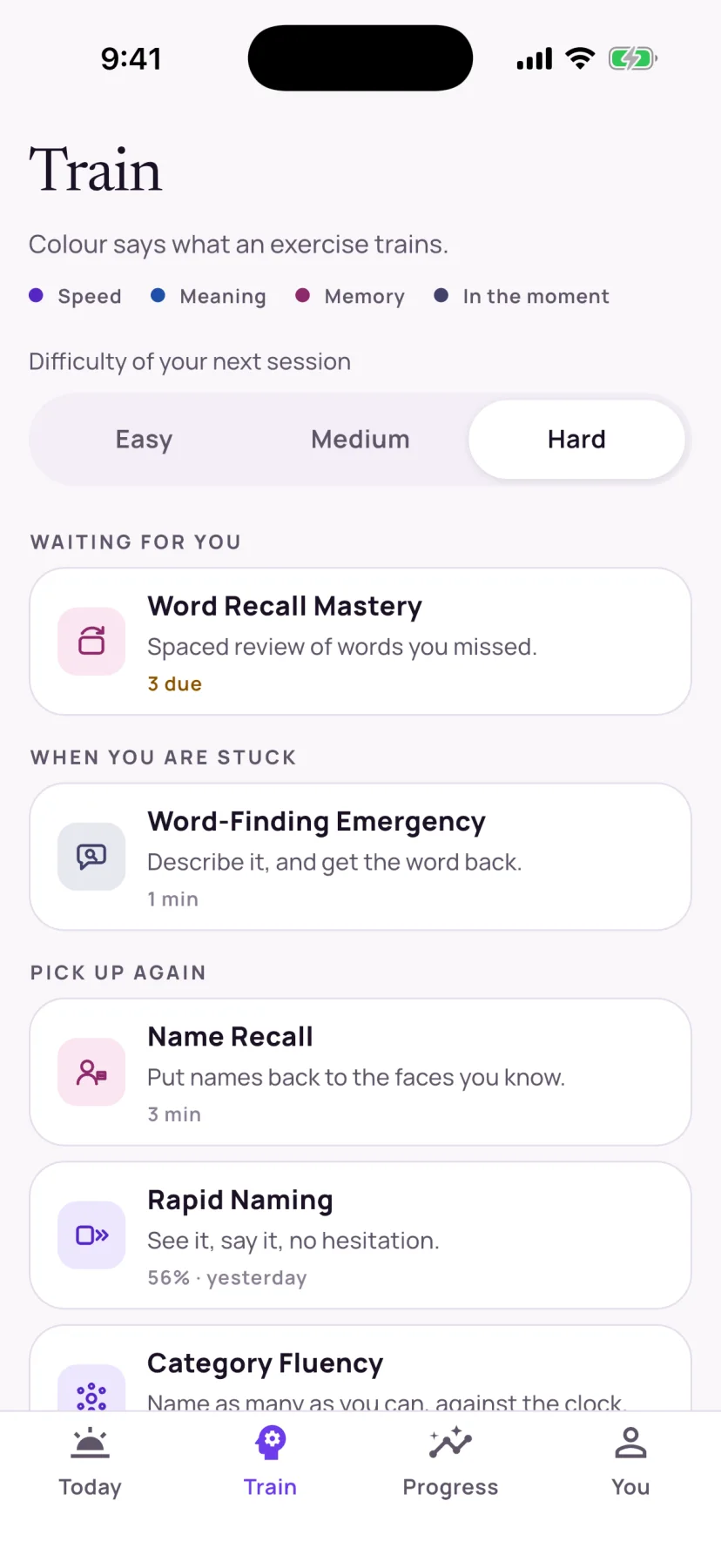
You choose the exercise
Eleven different exercises. The app suggests one; you can take any other.
- 03
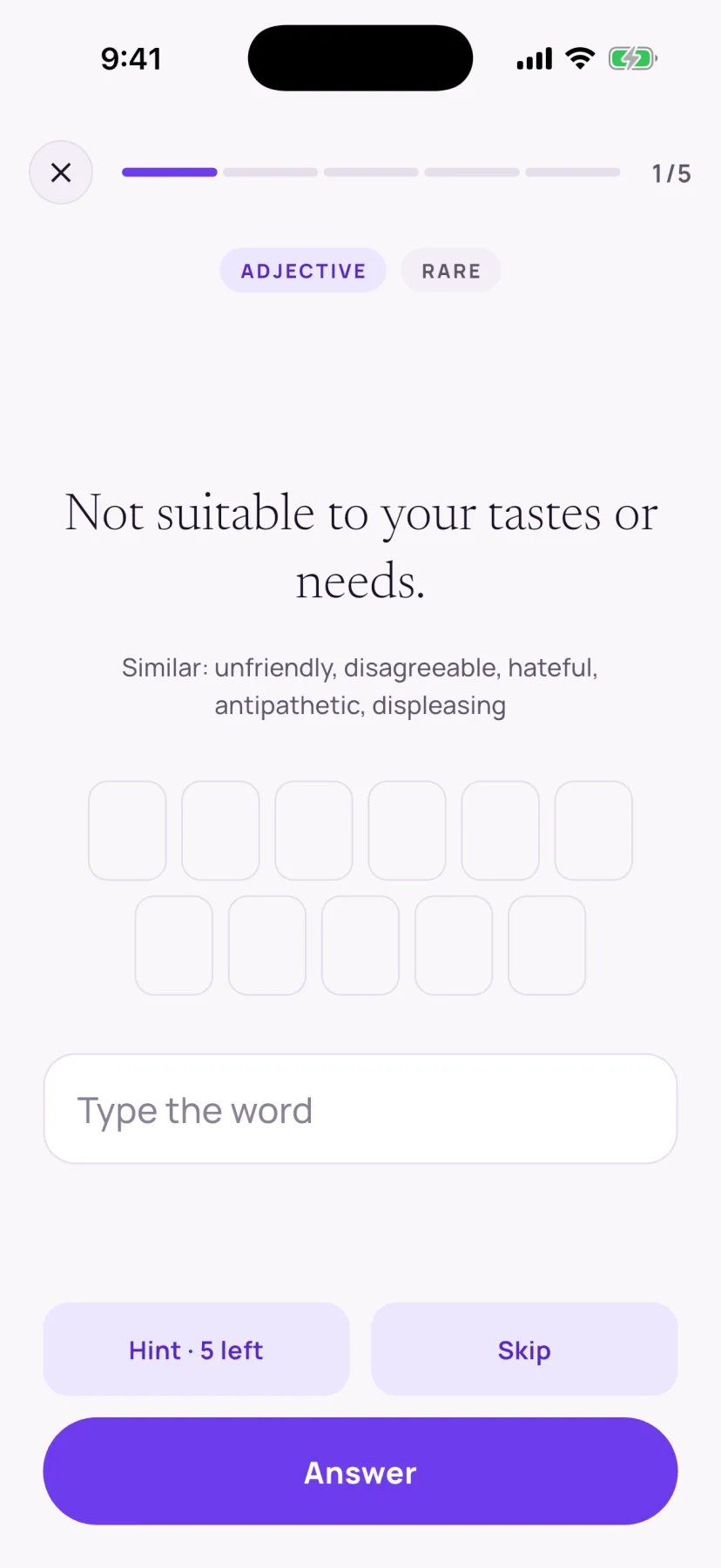
You retrieve the word
Read the definition and type the word. Hints appear only when you ask for them.
- 04
You see how it went
Every answer is marked as it happens: right, hinted, or queued to see again.
- 05
You watch the arc
Streak, recall time, and the words that keep resisting, week by week.
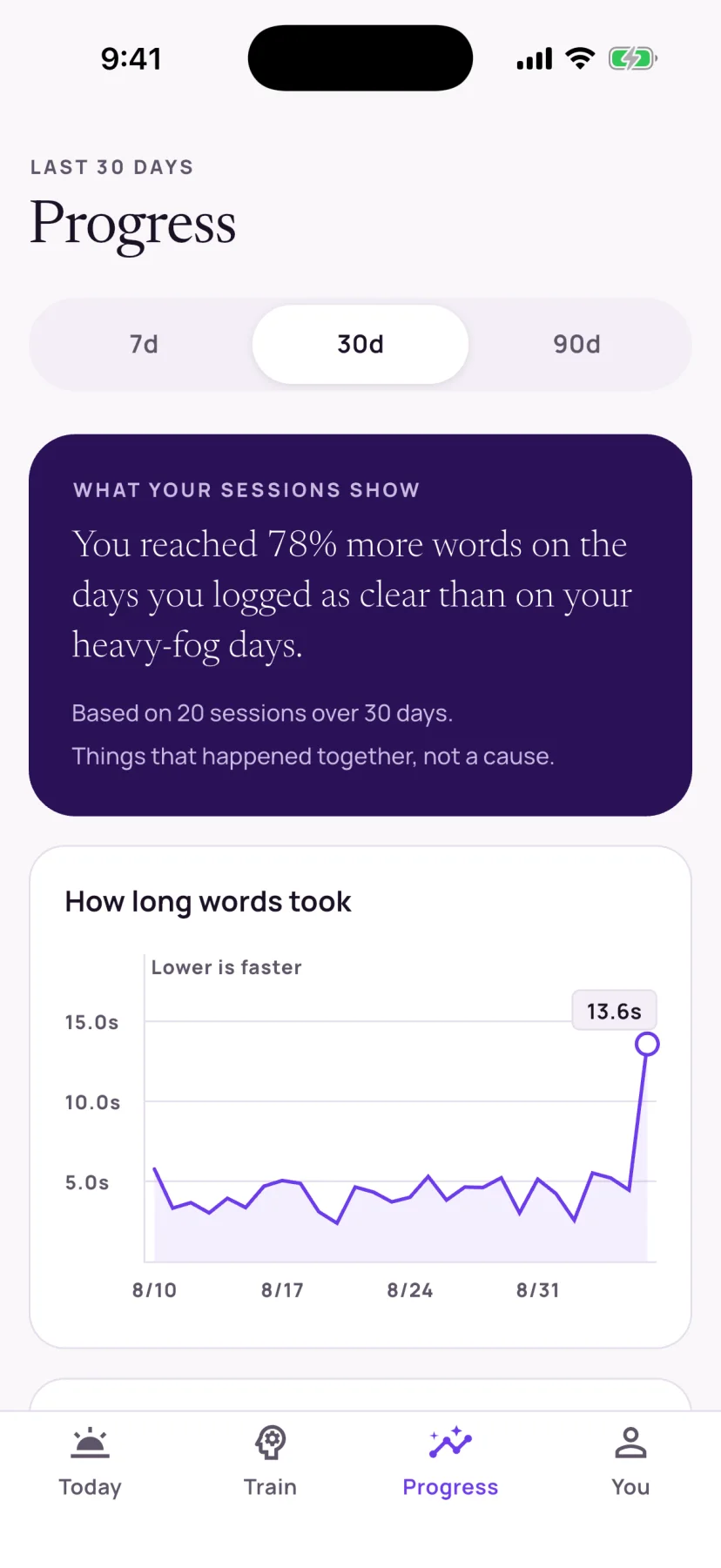
Real screenshots. The interface is complete in both English and Spanish.
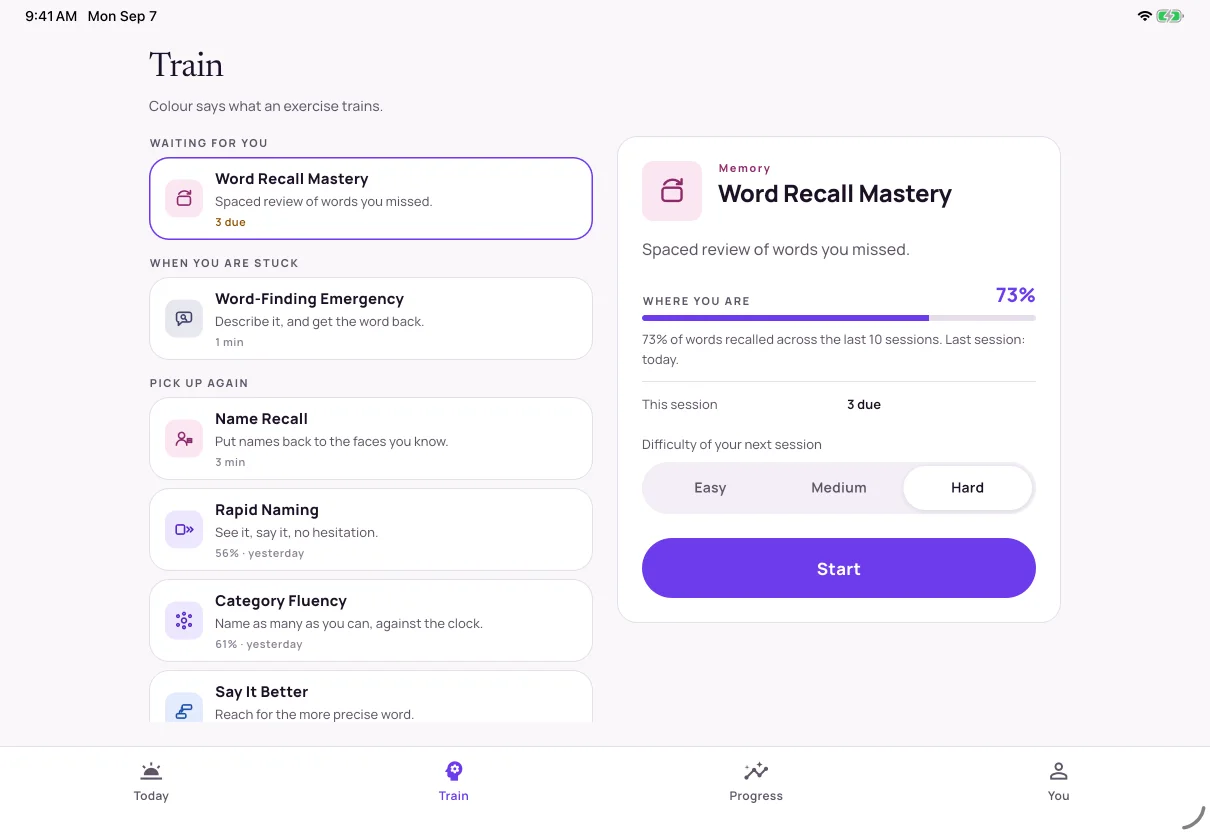
On iPad too
Given the width, the list and the exercise sit side by side: you choose on the left and the detail opens on the right, without leaving the screen.

WHY THEY OPEN IT
Four reasons to open it
The app asks which one is yours on the first screen, and that answer sets the exercise, the difficulty and the language you start in.
- 01
Words vanish mid-sentence
Especially in meetings, under pressure, with the word sitting on the tip of your tongue.
- 02
Going through menopause
Recall that comes and goes with the day, and practice that adjusts to that instead of demanding the same every morning.
- 03
Working in a second language
English and Spanish side by side, with professional vocabulary in both.
- 04
Keeping the practice up
No particular problem. Ten minutes a day of deliberate work with words.
What the practice looks like
Short sessions, eleven different exercises, and a difficulty that moves up or down on its own based on how yesterday went.
Tip of the tongue
You read the definition and retrieve the word, with hints that appear only if you need them.
Say it better
You swap a vague word in a sentence for the precise one. This is precision under pressure, not raw recall.
Memory bridge
An image anchors the word. You study it first, then retrieve the word without it.
Semantic ladder
You walk from one word to another through the words that link them, one meaning at a time.
Spoken naming
You say the word out loud and the device recognizes it without sending your voice anywhere.
Name recall
Your own contacts, with a photo and a note, encrypted on the device and never synced.
Eleven exercises in all. These are six.
What we do not do with your data
No advertising, no advertising identifier, no analytics SDK and no crash reporting SDK. The app works without an account: if you never sign in, nothing you record leaves your device.
-
Symptom logs are encrypted before they leave
The severity ratings and the free-text note are encrypted on your device with a key we never receive. We cannot read them.
-
Practice scores are not
Those sit readable on our servers behind access controls. We would rather say it plainly than claim more than we do.
-
Deletion is real deletion
You delete the account from Settings and it goes straight away, on the server and on the device. No hidden copy, no archive to restore from.
WordMend is not a medical device
WordMend Clarity is a language practice and self-tracking tool. It is not intended to diagnose, treat, cure, mitigate or prevent any disease or condition. The scores, levels and charts it produces are practice metrics that have not been clinically validated, and the symptom tracker is a diary that interprets nothing. If you are worried about memory, concentration or any other symptom, talk to a qualified health professional. The app is for adults 18 and over.
Documents and support
Support
Write to support@iqsource.ai and a person answers, not a form.