 www.iqsource.ai
 How to Modernize Legacy Systems Without Disruption
Ricardo Argüello — February 10, 2026

CEO & Founder
General summary
Legacy systems don't fail overnight — they accumulate costs, slow down your team, and block every new integration you want to build. Five modernization strategies exist, from API wrapping to full rebuilds, and the Strangler Fig pattern lets you migrate gradually without stopping operations.
- A system doesn't have to be 'old' to be legacy — a 5-year-old system with poor architecture is legacy; a 15-year-old well-maintained system may not be
- Five warning signs it's time to modernize: rising maintenance costs, integration problems, security risks, hiring difficulties, and degraded performance
- Five strategies available: API wrapping ($10K-$30K), re-platforming ($30K-$80K), refactoring, re-architecting, and full rebuild ($100K+)
- The Strangler Fig pattern lets you build new components alongside the old system and retire legacy pieces one at a time — zero downtime
- In our experience, the investment typically pays back within 6 to 18 months
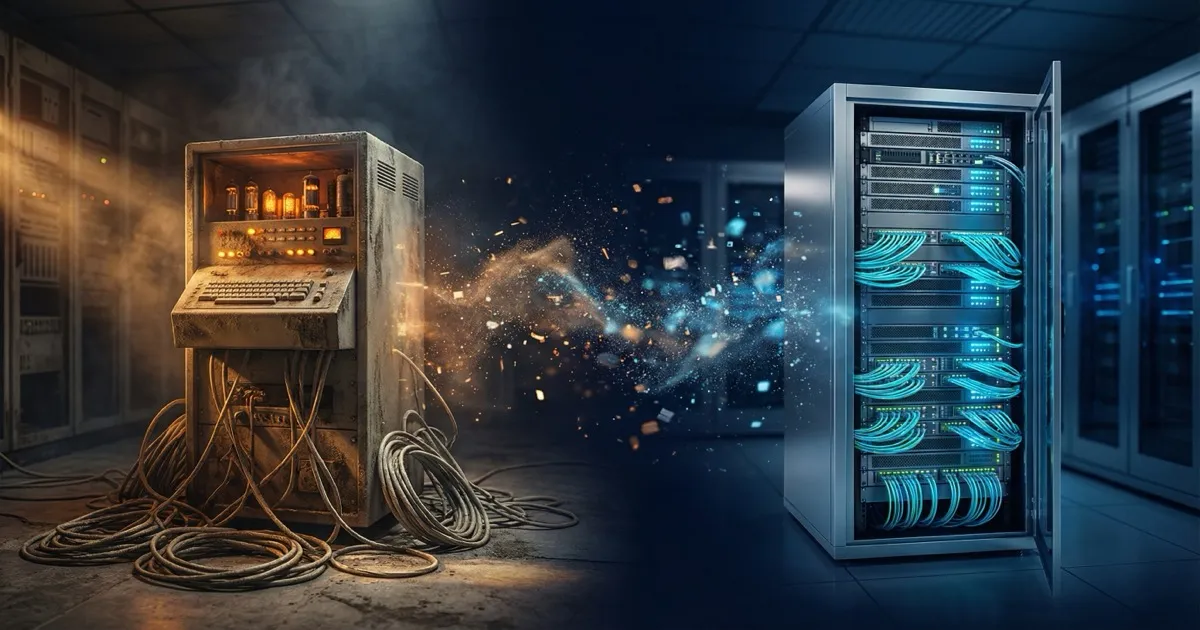
Imagine your office building has an old electrical system. It still works, but every time you plug in new equipment, fuses blow. Electricians charge more each year because fewer of them know how to work with this wiring. You can't rewire the whole building at once — the office has to stay open. So instead, you rewire one floor at a time, running new wiring alongside the old until everything is upgraded. That's how modern legacy system migration works.
AI-generated summary
What Is a Legacy System and Why Is It a Problem?
A legacy system is any enterprise software that remains in operation but uses obsolete technologies, has poor documentation, or is costly and risky to maintain. It’s a problem because it limits innovation capacity and generates rising costs.
It’s not just about the software being “old.” A 5-year-old system can be legacy if it was poorly designed, while a 15-year-old system can still function well if it has good architecture and maintenance.
Warning Signs That It’s Time to Modernize
B2B companies should consider modernization when they identify these warning signs. Ignoring these indicators makes future migration significantly more expensive.
- Rising maintenance costs: Every fix takes more time and money.
- Integration problems: You can’t connect new tools or services.
- Security risks: The software no longer receives security patches.
- Hiring difficulties: Few developers know the technology.
- Degraded performance: Slow response times that affect productivity.
Five Modernization Strategies to Choose From
There are five main approaches to modernizing legacy systems. The right strategy depends on the system’s current state, available budget, and risk tolerance.
1. Encapsulation (API Wrapping)
The legacy system is wrapped with a layer of modern APIs. It’s the fastest and most economical option, ideal when the system works well but needs to connect with modern tools.
2. Re-platforming (Lift and Shift)
The system is migrated to modern infrastructure (cloud) without changing the business logic. It improves scalability and reduces hosting costs without rewriting code.
3. Refactoring
The existing code is restructured to improve its internal quality without changing its external behavior. Ideal for systems with solid business logic but poor code organization.
4. Re-architecting
The system’s architecture is redesigned (for example, from monolith to microservices) while maintaining business logic. It offers maximum flexibility but requires greater investment.
5. Complete Rebuild
A new system is built from scratch. This is only justified when the current system is unrecoverable and the costs of maintaining it exceed those of rebuilding.
Migrating Without Disrupting Operations
The Strangler Fig Pattern is the most effective strategy for migrating without interruptions. It allows a gradual transition that minimizes operational risk.
- Identify boundaries: divide the system into independent functional modules
- Prioritize modules: start with those causing the most problems or delivering the most value
- Build in parallel: develop the modern version while the legacy system continues operating
- Migrate gradually: redirect traffic module by module to the new solution
- Retire in stages: deactivate legacy components only when the new version is stable
What Modernization Actually Delivers
In our experience working with mid-market B2B clients, companies that follow an incremental modernization approach typically see maintenance costs drop by a third or more, meaningful gains in team productivity as developers stop fighting old tooling, and a sharp reduction in unplanned downtime. The investment is usually recovered within 6 to 18 months depending on scope.
At IQ Source, we’ve worked with companies running 10+ year-old ERP and inventory systems where even small changes took weeks to deploy. After an API-wrapping phase followed by selective re-platforming, those same teams were shipping updates in days and spending far less on support.
Frequently Asked Questions
Key warning signs include: rising maintenance costs, difficulty finding developers who know the technology, frequent downtime, inability to integrate new tools, and recurring security issues. If you're experiencing 2 or more of these signs, it's time to evaluate modernization.
The cost depends on the approach chosen. An API wrapping can cost $10,000-30,000 USD. A partial re-platforming can range from $30,000 to $80,000 USD. A complete rebuild can exceed $100,000 USD. An incremental strategy helps spread the investment over time.
Yes, through an incremental migration strategy known as the Strangler Fig Pattern. New components are built in parallel with the existing system, functionality is gradually migrated, and the legacy system is retired piece by piece. At no point are operations halted.
It depends on scope. An incremental module-by-module migration can start delivering results in 3-6 months, while a full rewrite can take years. The most effective approach is prioritizing modules causing the most operational friction and modernizing them first, keeping the legacy system running in parallel until the transition is complete.
Related Articles
From Cassette Tapes to AI: 36 Years of Learning
At 14, I saved code to cassette tapes. At 15, I co-founded a software company. Google disrupted us. Today I run IQ Source. This is that story.
IBM Lost $31 Billion: the COBOL Monopoly Is Ending
IBM stock dropped 13% after Anthropic's COBOL modernization announcement. What this means for enterprises running legacy mainframe systems and what to do next.