 www.iqsource.ai
 Porsche Sold Its Consulting Arm, Then Rented It Back
Ricardo Argüello, September 1, 2026
CEO & Founder
General summary
On August 24, 2026, Porsche agreed to sell MHP, its management and IT consultancy of more than 4,500 people and roughly 743 million euros in revenue, to Tata Consultancy Services. TCS disclosed an enterprise value of 320 million euros. In the same move, Porsche signed a five-year partnership with TCS valued at about 1.25 billion euros for an AI and mobility center of excellence.
- Porsche and TCS signed on August 24, 2026, pending regulatory approval
- MHP has more than 4,500 employees, about 743 million euros in 2025 revenue and roughly 300 clients
- TCS disclosed an enterprise value of 320 million euros, under half a year of MHP revenue
- The five-year partnership Porsche signed back is valued at roughly 1.25 billion euros
- Porsche first bought into MHP in 1998 and completed full ownership a little over two years ago
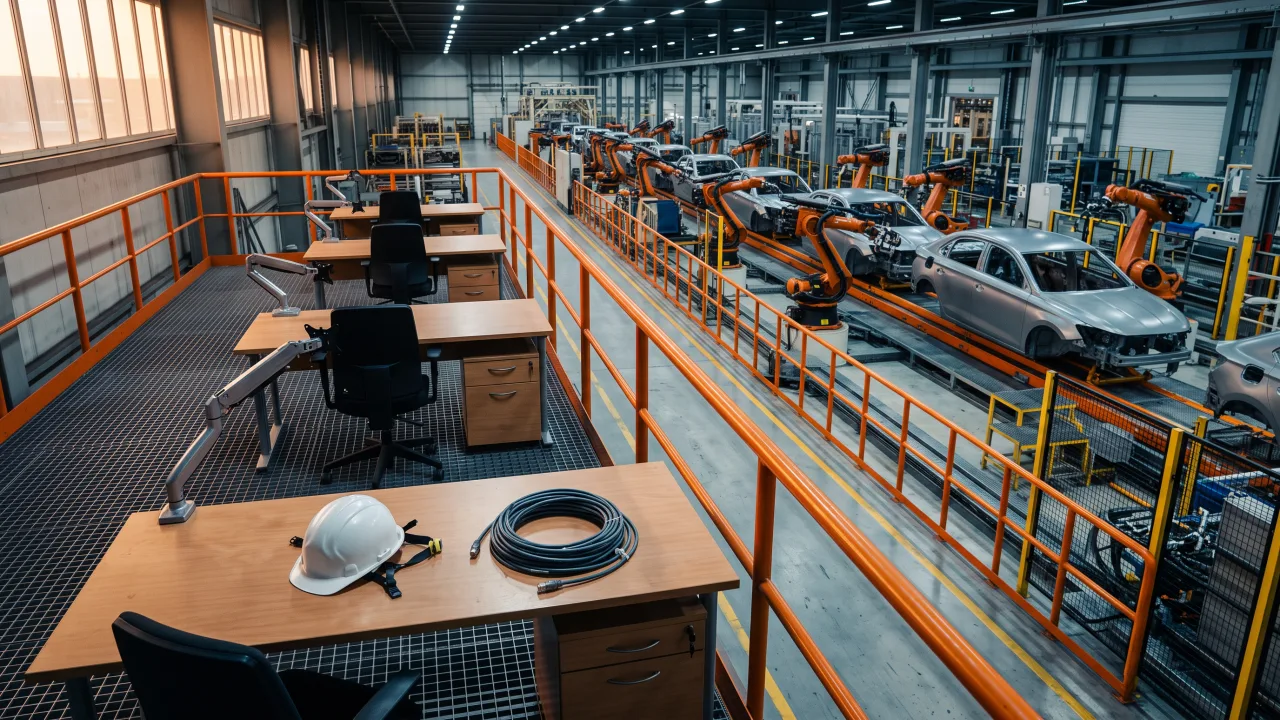
Picture a repair shop inside your own factory, staffed by forty-five hundred mechanics who spent nearly thirty years learning your machines. You sell it for about half a year of what it bills. The next day you sign a five-year contract for that same shop, now owned by someone else, to keep serving you at four times what they paid you. The work still gets done. What changed is who keeps what the work teaches.
AI-generated summary
Nearly thirty years of knowing why a 2011 decision left a column nobody uses.
That is the thing Porsche just sold, and no line item on the deal describes it.
The arithmetic of the week
On August 24, Porsche agreed to sell MHP to Tata Consultancy Services. MHP is the management and IT consultancy Porsche started buying into in 1998 and fully owned in early 2024: more than 4,500 people, about 743 million euros of 2025 revenue, roughly 300 clients across automotive, manufacturing, aerospace, defense and the public sector.
The price is 320 million euros of enterprise value, in cash. TCS disclosed it in its stock-exchange filing; Porsche’s own announcement does not carry the figure.
Then Porsche signed a five-year partnership with TCS worth roughly 1.25 billion euros, to run an AI and mobility center of excellence.
One payment in. Four times that, out, over five years.
The accounting is fine. That is not my objection.
Porsche had a brutal 2025. Operating margin fell from the mid-teens to barely above break-even. A sale that lands in one year against an expense spread across five is exactly the shape of transaction a CFO uses to steady a balance sheet, and I would not pretend otherwise.
So the financial case closes. Fine.
My problem is a different ledger, the one nobody keeps.
Execution transfers. Compounding does not.
A consultancy that has lived inside your systems for two decades holds knowledge that exists nowhere else. Which plant reports differently. Which integration breaks at month end. Who to call when the official process fails.
None of that is in a document. It is in people, and people now work somewhere else.
Under contract you keep the ability to ask for work and receive it, probably done well. What you lose is accumulation. Every project MHP delivers from here improves an asset that belongs to TCS, and TCS can sell that asset to every other carmaker on earth.
We made the same argument from the opposite direction in the piece on AI companies buying SaaS instead of building it. The question underneath both is which judgment you want living inside your walls.
Your version of this is smaller and identical
Almost no mid-sized company owns a 4,500-person consultancy. Almost every one of them is making this exact decision right now without naming it.
You hire someone to build the agents. Someone else to write the evaluations. A third party to wire the model into the ERP. Each contract is defensible on its own and probably correctly priced.
Two years later nobody inside can explain why the system decides what it decides, and renegotiating with the vendor is not a negotiation anymore.
I am not telling you to stop outsourcing. We are an outsourced partner, so that would be a strange position to hold. I am telling you to split the decision in two: what you want done, and what you want your company to learn how to do. Those are different questions and they almost never get asked separately.
At IQ Source the process map and the Go/No-Go gate come before any tooling choice, and part of that work is marking which steps are permanently yours and which can leave without strategic cost. We went deeper on that split in building is cheap, deciding not to is expensive.
Three questions before the next contract
If this vendor disappeared in eighteen months, could anyone inside explain how the thing they built works?
Does the knowledge from this project end up in a format your people actually open, or in the head of someone who bills hourly?
Are you buying an outcome or a capability? If it is the second, the contract should say how it transfers.
Porsche made a legitimate financial move in a bad year and it will help. The rest of the invoice does not come due in 2026. It comes due the day they need to rebuild something they already knew how to do.
Let’s separate what you outsource from what your team learnsFrequently Asked Questions
Porsche agreed to sell MHP to TCS on August 24, 2026, framing it as a focus on its core business during a year when its operating margins fell sharply. MHP employed more than 4,500 people and generated roughly 743 million euros in revenue. The transaction still requires regulatory approval.
TCS disclosed an enterprise value of 320 million euros in cash for 100% of MHP in its stock-exchange filing. Porsche's own announcement does not carry the figure. Alongside the sale, Porsche signed a five-year strategic partnership with TCS valued at roughly 1.25 billion euros, close to four times the sale price.
The risk is not execution capacity, which stays available under contract. It is where learning accumulates. Once the team that understands your processes belongs to a supplier, every project they run improves the supplier's asset. You buy outcomes and stop compounding judgment of your own.
Build in-house when the capability touches processes that differentiate you and when judgment compounds through repetition on your own data. Outsource when the work is standard, measurable by deliverable, and generates no knowledge you want to keep. Most companies do both and never separate which is which.
Related Articles

Burry's Palantir Math Is Right. His Answer Isn't.
Michael Burry says Palantir is a consultancy in disguise and backs it with one ratio. I pulled the filings. The ratio checks out. The conclusion does not.

Bristol Myers Squibb Is Building Its Own AI Factory, Not Renting It
BMS is the third pharma company in nine months to build its own AI supercomputer with NVIDIA. What it rents instead is a different layer entirely.

Frontier Company Named Accenture. Wall Street Cut It Anyway.
Microsoft committed $2.5B to Frontier Company and named Accenture a launch partner. Two weeks earlier, TD Cowen downgraded Accenture for the exact same reason.

Anthropic Uses Salesforce. Why Don't You?
The most advanced AI companies buy SaaS instead of building it. A framework for deciding when to build, when to buy, and why the default just flipped.

West Monroe Built 8 Tools Instead of Buying Them
West Monroe avoided over $300,000 a year by building with ChatGPT and Codex what it would have bought. The saving holds because every tool has a review date.

The decade's most expensive rebrand: Big Five to FDE
Google joined the FDE race. Maurizio calls it the rebrand of the 2020s. It's the third label for the same job since 1990. This time the difference is Satya.