 www.iqsource.ai
 Matt Wood (AWS): Your AI Decisions Are Decaying Right Now
Ricardo Argüello, July 28, 2026
CEO & Founder
General summary
Matt Wood, AWS's Chief AI and Technology Officer, published an essay on July 15 comparing enterprise decisions to nautical charts: precise the moment they're issued, obsolete almost immediately after. His argument is that AI decisions carry a half-life almost no company tracks, and he proposes a system for retesting them before they turn dangerous.
- Matt Wood, AWS's Chief AI and Technology Officer, published an essay titled 'The Half-Life of an Assumption' on July 15 in his LinkedIn newsletter Counterintuitive
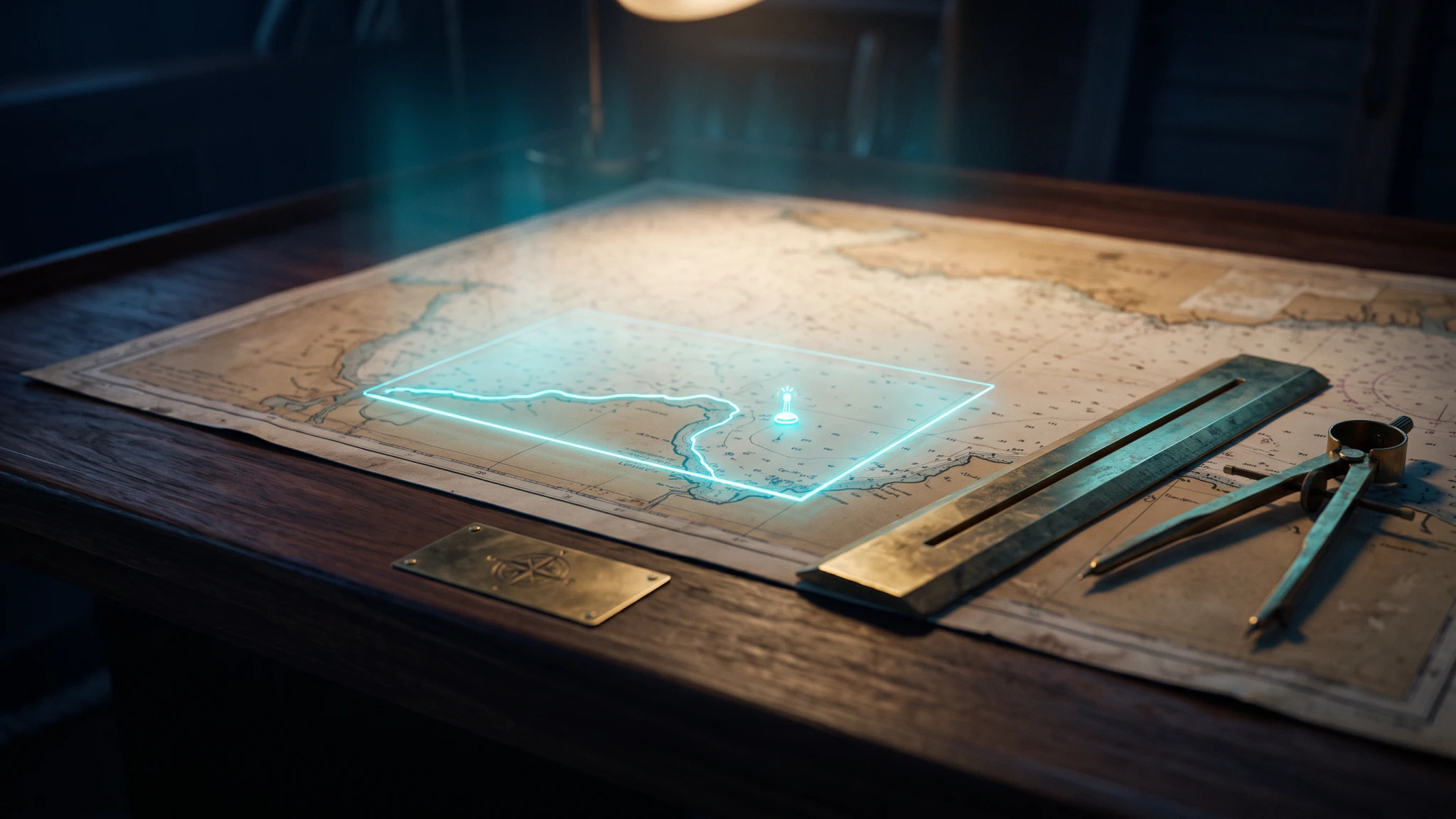
- He compares business decisions to nautical charts: accurate when issued, but the world starts contradicting them almost immediately, which is why the Notice to Mariners system has existed since 1834
- His core claim: every AI decision has a half-life, some stay valid for years, others expire between one planning cycle and the next
- Most companies record the answer a decision produced, not the conditions that made it valid, so nobody knows when to reopen it
- His fix: record why a decision was made, not just what was decided, so it can be cheaply retested when those conditions change, instead of waiting for a full rebuild
Imagine your company has a document from a year ago that says AI can't do X. Today AI can do X, and nobody's job is to tell you. That's exactly what Matt Wood describes: the original decision wasn't wrong, the world changed after it was made, and nobody built the notice system that would have told you when.
AI-generated summary
Matt Wood, AWS’s Chief AI and Technology Officer, published an essay on July 15 in his LinkedIn newsletter, Counterintuitive, which has more than 30,000 subscribers. The title: “The Half-Life of an Assumption.” The metaphor he builds it on is a nautical chart: the most authoritative document there is, surveyed, checked, issued under a national hydrographic office, and out of date almost as soon as it’s printed. A buoy drags out of position. A wreck settles onto a shoal. A dredged channel silts in. The sea starts disagreeing with the chart almost immediately, and navigation, as a discipline, is built around that fact.
Nothing in the original chart had to be wrong. The surveyors did their work; the cartographers drew what was true at the time. The world changed after publication. Being authoritative and being current are different properties, and the gap between them is what puts a ship on the rocks.
The part almost no company tracks
Here’s Wood’s central claim, and it’s the reason I’m writing about it: organizations produce decisions with the same care that goes into a chart, and then preserve them like monuments. The analysis gets researched, reviewed, approved, and embedded in roadmaps, budgets, and controls. What changes afterward almost never stays attached to that decision. Somewhere in your company there’s a document that says AI can’t do something it now can, and no notice has ever been issued against it.
Wood is careful to note this isn’t carelessness. Organizations couldn’t function if every decision stayed permanently open to revision; converting judgment into structure is how anything gets built. The practice only fails when the world changes faster than the structure that recorded it.
Every consequential decision carries a half-life. Not a number anyone can calculate exactly, but a decay rate all the same: the conditions that made it reliable erode, and some erode much faster than others. Some business assumptions stay true for years. Assumptions about what AI technology can do now go stale between one planning cycle and the next. Wood puts numbers on it: which model is best for a workload can go stale in weeks, the right agent configuration in days.
Why sound decisions outlive their own evidence
The mechanism Wood describes is uncomfortably familiar. The more work that went into a decision, the more authority it acquires. Then the artifact built from that decision starts reinforcing it: a system with years of investment looks appropriate simply because it exists, a large team appears to prove the problem needs a large team, a detailed roadmap makes the destination look understood. The artifact becomes evidence for the decision that produced it, and reopening the premise starts to feel like diminishing everyone’s prior work.
Wood also dismisses the obvious instinct to just “forecast better.” It helps a little, but capabilities emerge unevenly, and several modest improvements can combine to cross a threshold that no single benchmark captures. Prediction can’t carry the weight planning wants to put on it.
The notice system he proposes
Wood’s practical answer is the same one mariners have used since 1834: make correction a normal part of operating the system, not an exception to it. That starts with recording why a decision was made, not only what was decided. A process excluded from automation was rarely judged permanently unsuitable; it was excluded because computer use failed too often, because supervision erased the economic benefit, or because the remaining errors carried too much risk. Those are testable conditions, and the decision can carry its own triggers for reconsideration: when computer use materially improves, or when cost falls below the original business case’s threshold, the evaluation runs again.
Keeping the original test cases makes that retest cheap. Wood’s sharpest point: AI itself can stand the watch. An agent can track new models against the old evaluation, attempt the same requests and the same exceptions, and return the question to the decision’s owner with evidence attached, rather than a generic stream of AI news. The company never has to debate computer use in the abstract. It learns whether the result on its own work has crossed the threshold that made the original decision fail.
What this means for your company
This connects directly to something I wrote before: building got cheap, but deciding what to build didn’t. That post explained the symptom: execution cost dropped, so the quality of the decision about what deserves to exist is now what separates one company from another. Wood’s essay explains the mechanism by which that symptom gets worse over time if nobody attends to it: the decisions you made six months ago about what to automate and what not to are already starting to expire, and there’s probably nobody in your company whose job is to notice.
In AI Maestro discovery, we treat this as a core part of the process, not a follow-up check. A Process Reality Map documents not just what got automated or excluded, but the specific conditions that made that call correct at the time, exactly the “why” Wood says almost nobody records. That turns a decision that would otherwise calcify into one that can be cheaply retested once the model, the cost, or the tool that justified it changes. The alternative is discovering your decision expired the day a competitor builds, in a week, what you decided a year ago wasn’t worth automating.
Document the why before the decision expiresFrequently Asked Questions
Matt Wood, AWS's Chief AI and Technology Officer, uses the term to describe how every enterprise AI decision rests on conditions that decay over time: which model is best for a task, for instance, can go stale within weeks. The decision wasn't wrong when it was made; the world changed afterward.
Because a nautical chart is accurate the moment it's published, but the real world (a buoy that drifts, a new sandbar) starts contradicting it almost immediately. That's why the Notice to Mariners system has existed since 1834, not because the original charts were flawed, but because they need continuous correction.
According to Matt Wood, most don't, because they record the answer ('we excluded this process from automation') but not the conditions that made it valid ('because computer use failed too often'). His proposal is to record the why, not just the what, so the decision can be retested when those conditions change.
Because unlike other business assumptions, which can hold for years, assumptions about what AI technology can do shift within weeks or days. An agent's configuration can go stale in days, while most companies still operate at the review cadence of a decision made once and never revisited.
Related Articles

78% of Your Employees Already Use AI Without Permission. Don't Stop Them.
Boris at Anthropic watched it happen: one data scientist opened Claude Code, and within a week the entire floor had it. 98% of companies have shadow AI.

Google's $180B: The Enterprise Signal Nobody Reads
Google went from $30B to $180B in AI CapEx. No keynote needed. For enterprise buyers evaluating AI vendors, that number tells more than any product demo.

Claude Certified Architect: The Signal You Should Read
Anthropic launched its first technical certification and the biggest consulting firms already moved. What this means for B2B companies.

Your AI Investments Have an Expiration Date (2026)
Fine-tuning, RAG, and prompt engineering depreciate with each new model. Which AI investments hold value and a concrete filter to decide before you spend.

Google's AI Ecosystem: What Works for B2B, What Doesn't
Vertex AI, Gemini, BigQuery ML, Document AI: practical guide to evaluating which Google AI tools fit your B2B operation and which ones you can skip.