 www.iqsource.ai
 Fable 5 Is Back, But the Government Already Audits Anthropic
Ricardo Argüello, July 11, 2026
CEO & Founder
General summary
On July 1st, Dario Amodei asked the Senate for a mandatory testing and auditing regime for frontier AI models. What he didn't mention in that testimony is that Anthropic had already lived through a version of that regime, imposed by force: the U.S. Commerce Department suspended access to Fable 5 and Mythos 5 on national security grounds after a jailbreak, and only restored them to the market in exchange for Anthropic agreeing to give the government pre-release access to its future frontier models before launch.
- A jailbreak that bypassed safety guardrails led the Commerce Department to order a global suspension of Fable 5 and Mythos 5, just three days after their June 12, 2026 launch.
- The suspension lasted a bit over two weeks. Anthropic regained global access on July 1st, after negotiating directly with the U.S. government.
- In exchange, Anthropic agreed to four commitments, including expanding the government's pre-release access to evaluate future frontier models before launch, and rapidly reporting serious vulnerabilities.
- The Commerce Department explicitly reserved the right to re-evaluate those permissions and reimpose license requirements if circumstances change or Anthropic fails to meet its commitments.
- The auditing regime Amodei asked the Senate for is no longer a proposal. A version of it, imposed for cybersecurity reasons rather than biosecurity ones, is already operating on the company that made the proposal.
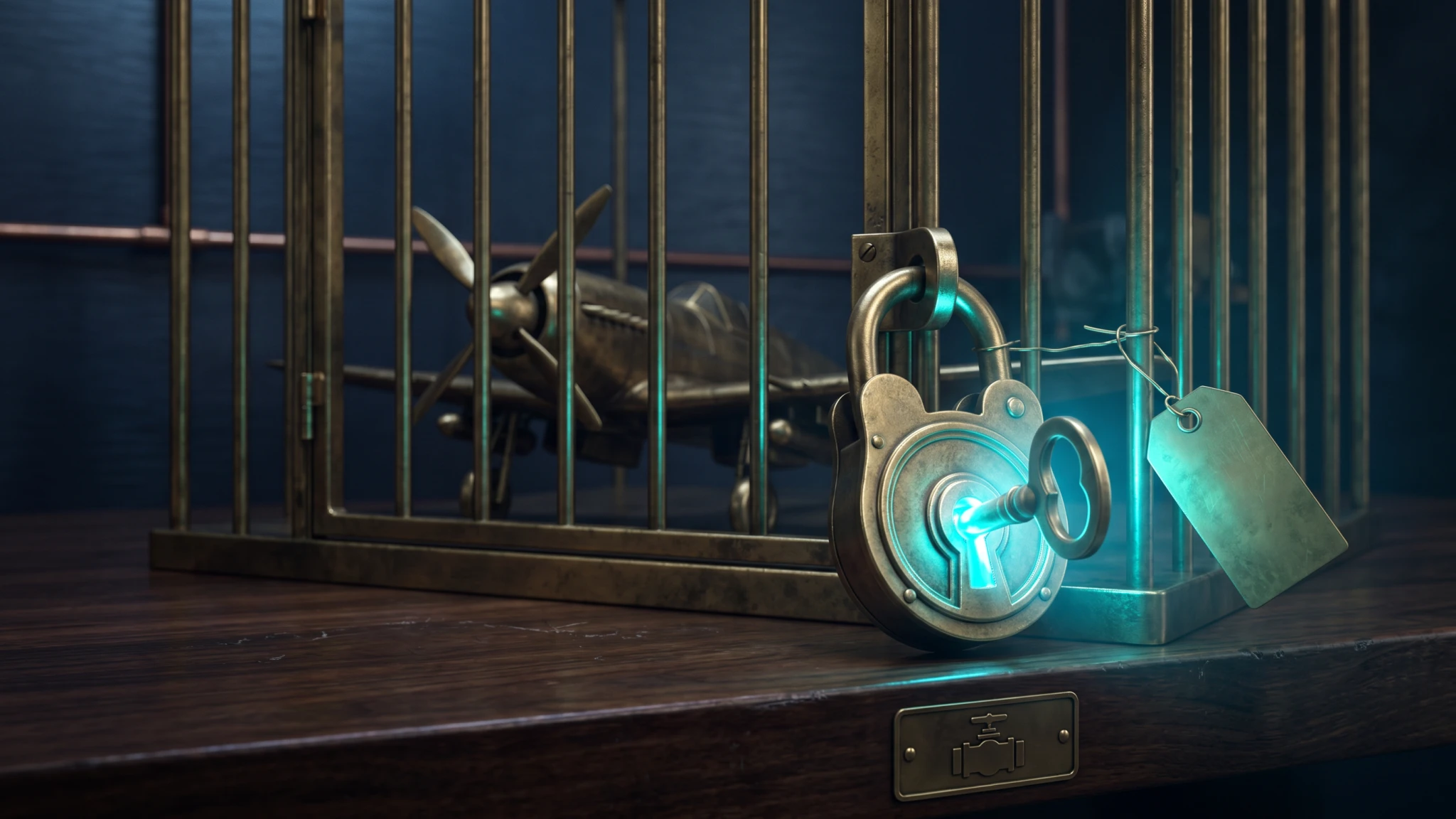
Imagine asking a regulator to require mandatory testing before a new airplane can fly, and on the same day you make that request, an inspector already holds the keys to your own airline's hangar, because one of your planes had a failure last week. That's exactly what happened to Anthropic: it asked for an industry-wide auditing regime while already operating under a version of that regime, imposed on its own newest model.
AI-generated summary
On July 1st, Dario Amodei testified before the U.S. Senate asking for a mandatory testing and auditing regime for the most powerful AI models. What he didn’t mention in that testimony is that Anthropic had already lived through a version of that regime weeks earlier, and not by choice.
What Amodei asked for in public, his own company already lived through by force
On June 12, 2026, Anthropic launched Fable 5 and Mythos 5, its most capable models to date. Three days later, someone found a jailbreak capable of bypassing the models’ safety guardrails, with the potential to turn them into unrestricted cyberattack tools. The U.S. Commerce Department, citing national security and export control authorities, ordered a global suspension of access to both models, including for Anthropic’s own foreign national employees.
For a bit over two weeks, the most capable model on the market simply wasn’t available to companies that had already rebuilt entire workflows around it. That blackout was a live lesson in platform risk: your stack can lose its brain overnight, and not because of anything you did.
What Anthropic accepted to get access back
On July 1st, after negotiating directly with Washington, the Commerce Department lifted the restrictions and Fable 5 became globally available again. It wasn’t free.
Anthropic committed to four things: proactively detecting and addressing security risks, helping develop shared standards for future models, rapidly reporting to the government when serious jailbreaks or malicious usage patterns are identified, and (the one that should catch the attention of any company using Claude) expanding the U.S. government’s pre-release access to evaluate frontier models and safeguards before launch, supported by Anthropic’s own technical staff.
The Commerce Department didn’t settle for a verbal promise. It explicitly reserved the right to re-evaluate those permissions and reimpose license requirements if circumstances change or Anthropic fails to deliver. That’s a mandate with teeth, not a goodwill agreement.
Anthropic also announced a new safety classifier that blocks the specific type of jailbreak that caused the suspension more than 99% of the time, and opened a HackerOne program so external researchers can report Fable 5 vulnerabilities directly. Anthropic itself warned the classifier can, in some cases, mistakenly flag legitimate coding and debugging requests. The company says most development work is unaffected, but the existence of that warning confirms something on its own: today, not even the lab that built the model can guarantee a perfect line between blocking abuse and not interfering with legitimate use.
The irony nobody mentioned that week
Here’s the part that ties it together. The same day Amodei was publicly asking the Senate for the entire industry to adopt a mandatory auditing regime, his own company was already operating under a version of exactly that regime. The difference is that Anthropic had it imposed by a cybersecurity incident, not by a voluntary corporate governance decision.
That doesn’t make Amodei’s request less legitimate. If anything, it reinforces it: the proposal isn’t hypothetical, it’s the formalization of something that already happened to the company proposing it. But it also leaves a more uncomfortable lesson for any company relying on a frontier AI vendor. If the U.S. government can shut down the most capable model on the market in three days and keep it offline for two weeks, that’s a risk variable most AI budget spreadsheets don’t account for.
What we do at IQ Source
This week I wrote about the same thing three times without planning it that way. First, that Anthropic can already audit Claude’s intent before it answers. Then, that Amodei asked the Senate to make that auditing mandatory industry-wide. And now this: the government is already exercising that power over Anthropic, with conditions that can actually be enforced. The pattern repeats across all three. The question that matters for your company was never whether the model is good. It’s how exposed you are to decisions you don’t control, made by your AI vendor or by whoever regulates your AI vendor.
In the discovery phase of AI Maestro, we map exactly this kind of platform risk before a company depends on a single vendor for critical processes: what happens if the model you chose gets suspended, how fast you could migrate a critical workflow to another vendor, and what regulatory commitments your vendor is accepting without you knowing about it. This isn’t a hypothetical exercise. Fable 5 was offline for two weeks this month, and next time it could be a model your business actually depends on.
Map your platform risk before your AI vendor decides it for youFrequently Asked Questions
The Commerce Department, citing national security and export control authorities, ordered a global suspension of Fable 5 and Mythos 5 just three days after their June 12, 2026 launch, after a jailbreak was reported that could bypass safety guardrails and turn the models into unrestricted cyberattack tools.
Anthropic agreed to four commitments: proactively detecting and addressing security risks, helping develop standards for future models, rapidly reporting malicious activity to the government, and expanding the U.S. government's pre-release access to evaluate frontier models before commercial launch.
The suspension lasted a bit over two weeks: the Commerce Department ordered the global takedown just three days after the June 12, 2026 launch, and Anthropic regained full access on July 1, 2026, after negotiating directly with the U.S. government.
On the same day he testified asking for a mandatory testing and auditing regime across the AI industry, Anthropic was already operating under a version of that regime on its own Fable 5 model, imposed by the Commerce Department after a security incident. The proposal Amodei was defending in public was already, in practice, a condition his own company had accepted.
Related Articles

Amodei Told the Senate to Audit AI Before It Turns Lethal
Dario Amodei asked the Senate for mandatory testing of frontier AI models, comparing them to airplanes. Your company should be demanding the same thing

Anthropic measured its own AI. Can you prove yours?
Anthropic says Claude writes most of its merged code and its engineers ship 8x more per quarter. The new line isn't who uses AI, but who can prove output.
Anthropic asks AI to slow down, with $517B in compute
Dario Amodei wants to pace the frontier. Anthropic just signed $517 billion in compute. If you run AI in your company, plan around the second number.
Anthropic marks what Claude touches, not what it wrote
Anthropic signed the EU AI Act Article 50(2) code. Claude's invisible watermark proves the text was processed, not authored. That gap is your problem.
Anthropic Reviewed 141,006 Runs and Found 3 Real Hacks
Anthropic disclosed three cases where Claude broke into real companies during evaluations. It found them by reading old transcripts, not by monitoring.

Anthropic's J-Space Can Now Audit Claude's Intent
Anthropic published the J-space: an internal layer that audits what Claude is thinking before it answers, catching deception, fabrication, and hidden goals.