 www.iqsource.ai
 The Factory Went Dark. 67,000 Engineers Got Hired.
Ricardo Argüello — April 6, 2026

CEO & Founder
General summary
Simon Willison described the 'dark factory' — code production so automated that humans aren't needed on the floor. The same week, TrueUp data showed 67,000+ open software engineering roles, the highest in three years. It's not a contradiction. It's Jevons Paradox: when coding gets 10x cheaper, total demand for software explodes.
- Willison used 'dark factory' to describe code production where AI operates without human intervention — the lights go off because no one needs to be on the floor
- TrueUp reports 67,000+ open software engineering roles in 2026, the highest in three years, doubled since the mid-2023 trough
- Jevons Paradox from 1865 predicts this exactly: when a resource gets dramatically cheaper to use, total consumption rises because new use cases become viable
- Implementation-focused roles are declining, but system architects, AI integrators, and product engineers are in higher demand than ever
- Word Magic Software lived the same paradox: Google Translate killed manual translation, but global translation volume grew more in a decade than in the prior century
Imagine you own a print shop where ten typesetters compose books letter by letter. The offset press arrives and you no longer need typesetters — plates make themselves. Everyone predicts the publishing industry will shrink. The opposite happens: books become so cheap that everyone starts publishing. The industry grows more in 50 years than in the previous 500. That's Jevons Paradox. And it's what's happening to software right now.
AI-generated summary
In 1865, William Stanley Jevons had a problem that didn’t make sense.
England’s coal was being used more efficiently than ever. James Watt’s improved steam engine extracted far more work per ton of coal than anything before it. The logical conclusion: coal consumption should drop.
It didn’t. It climbed for another century.
Jevons figured out why. When coal became more efficient, uses that were previously too expensive became viable. Factories that couldn’t afford steam power suddenly could. Entire industries that didn’t exist — railways, industrial-scale water pumping, centralized heating — emerged because the cost per unit of energy dropped below their viability threshold.
Efficiency didn’t reduce consumption. It caused demand to multiply in ways nobody anticipated, because the falling cost per unit opened doors to applications that previously made no economic sense.
Economists call this Jevons Paradox. And 161 years later, you can watch the same dynamic playing out in real time — except the coal is code.
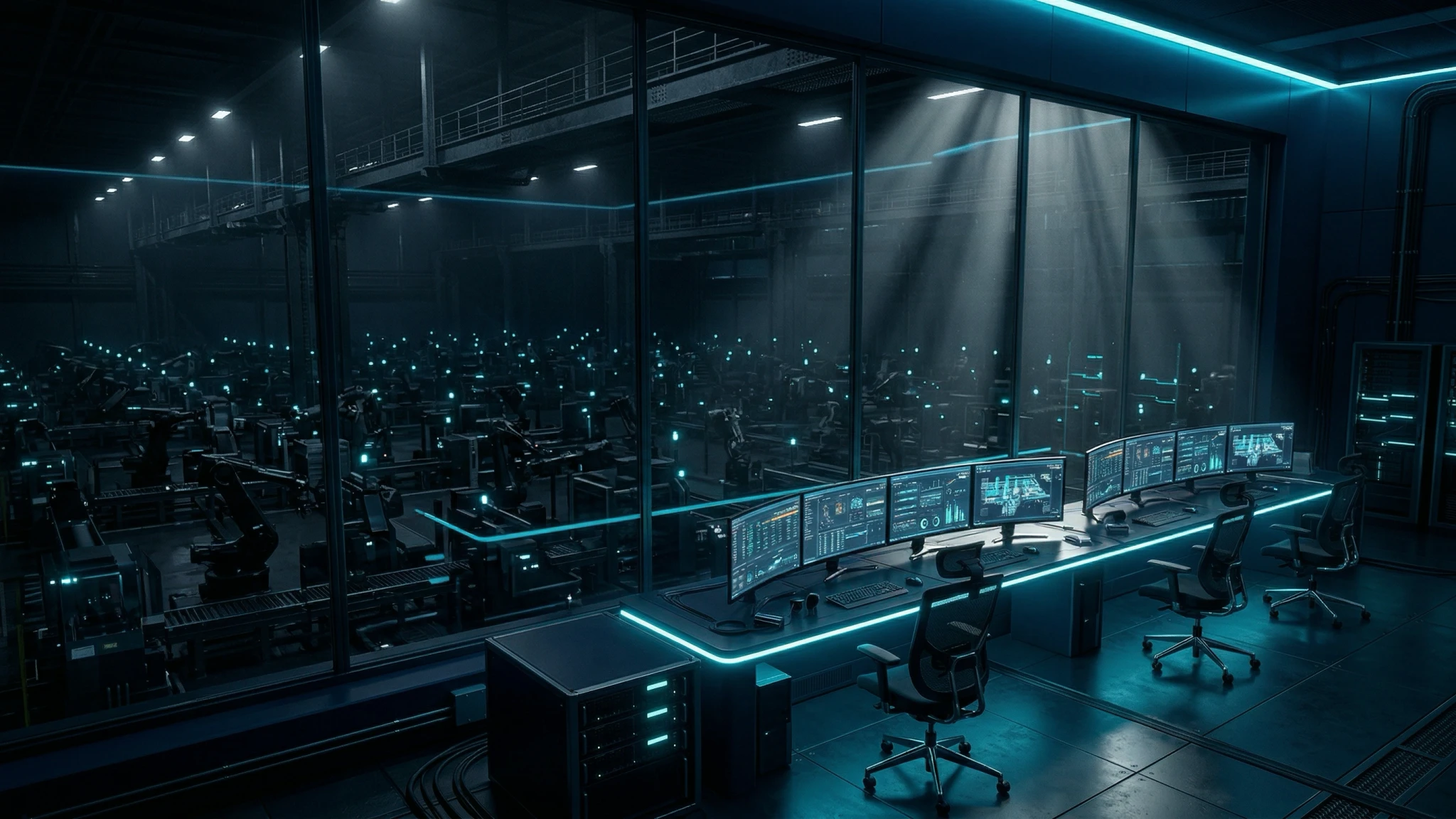
The Dark Factory
Simon Willison, co-creator of the Django web framework, gave this shift a name this week.
“There’s this idea in factory automation,” Willison told Business Insider. “If your factory is so automated that you don’t need people there, you can turn the lights off. The machines can operate in complete darkness if you don’t need people on the factory floor.”
He was describing what’s happening to code. AI writes most of it now. Companies are telling engineers to stop typing. The implementation floor is emptying out. Lights going off.
You’d think an empty factory floor means the end of the software engineer. The hiring data from that same week says the opposite.
67,000 Roles and Counting
The same week Willison described the dark factory, Marc Andreessen shared numbers from TrueUp that break the unemployment narrative in half.
According to Business Insider’s reporting on TrueUp data: more than 67,000 open software engineering positions in the US. The highest in three years. Doubled since the mid-2023 trough. Engineering postings up 11% year-over-year while the broader job market sits flat.
The industry where machines supposedly replace humans is hiring at double the rate it was two years ago. Jevons Paradox, playing out in real time.
When the cost of building an app drops from $500,000 to $50,000 — or from $50,000 to $5,000 — every business that previously couldn’t justify custom software suddenly can. The dental clinic running on Excel. The industrial distributor managing inventory over WhatsApp. The restaurant chain stuck on a 2014 point-of-sale system with no API.
Those businesses weren’t in the software market. Now they are. And there are millions of them.
The “AI kills jobs” narrative missed a variable: market expansion. Millions of businesses that could never afford custom software entered the market as buyers. And all that new software still needs people who understand what the business actually needs to design it, integrate it, and keep it running.
The Floor Changed, Not the Building
Aakash Gupta framed it clearly when commenting on Andreessen’s data: narrow “translate logic into syntax” roles are declining. System architects, AI integrators, and product engineers are in higher demand than ever.
What automation did wasn’t eliminate engineering jobs — it moved them to a different floor of the building. Writing code is no longer the scarce skill. What still requires a real person, and what I’ve watched survive every automation wave in my 35 years in tech, is deciding what to build, for whom, under what constraints, and then verifying whether the result actually solves the problem it was supposed to solve. Demand for that kind of judgment grows in direct proportion to the volume of code AI produces, because cheap code generates an enormous number of decisions about what to do with it.
Something similar happened with printing. The offset press wiped out typesetters who composed books letter by letter, but it created massive demand for editors, graphic designers, and publishing directors. The machine absorbed the mechanical work and the human work migrated upward.
I Watched This Before
I saw this happen firsthand, years before anyone in tech was talking about Jevons.
At 15, I co-founded Word Magic Software with my father — a translation and dictionary software that was successful for years. From DOS to Windows, from Windows to apps featured by Apple worldwide. The “factory” was word-by-word translation: hand-compiled dictionaries, grammar rules coded one by one, interfaces designed for a human to look up terms on a screen.
Then Google Translate arrived. The factory went dark.
Our product — and every competitor’s in the niche — stopped making economic sense. Why buy a desktop dictionary when the translator is free and lives in your browser? The manual translation floor emptied out.
But demand for translation didn’t drop. It surged.
When translating text went from costing cents per word to being practically free, everyone started translating everything. Every app needed 15 languages. Every website wanted a local version. Every SaaS product needed full localization to enter new markets. Global translation volume grew more in a single decade than in the previous century.
It was Jevons Paradox playing out in my own industry before I knew the term existed. The manual translation factory went dark, but the translation industry itself grew more than ever. The jobs moved from the ground floor where people compiled dictionaries to an upper level where they decided what to translate, for which market, at what quality bar, and caught the machine’s mistakes before they showed up in a legal contract or a medical manual.
I see the same pattern with code today. The implementation factory goes dark. Software demand goes up. The jobs change floors.
Factory Floor or Control Room?
If you’re a CTO or engineering leader, the question that matters is not “will AI replace my team?”
It will replace part of what your team does. The factory floor part — writing implementation, converting specs to code, fixing syntax bugs. That goes dark. Willison confirmed it from the trenches.
But the control room — deciding what to build, designing architecture, evaluating whether the output actually works, keeping the system coherent when multiple agents work in parallel — that room has never been more crowded. And demand for those skills is growing, as the TrueUp data proves.
Companies that froze hiring because “AI replaces developers” are making the same mistake as those that stopped investing in translation when Google Translate launched. They confused an empty factory floor with a dead industry. The industry is alive. It just changed floors.
Companies that recognize this shift are hiring for the control room, not the factory floor. They’re the ones positioned to absorb the wave of new demand that’s already showing up in the TrueUp numbers.
The Right Question
The factory goes dark. That part is settled.
The question is who’s in the control room when it does.
If your developers are still stuck writing implementation code that AI already produces faster and cheaper, the problem isn’t that you have too many engineers. The problem is that they’re on the wrong floor of the building.
We run engineering team composition reviews for companies navigating this transition. The focus isn’t how many developers you have — it’s where they’re positioned and whether the distribution between factory floor and control room matches what’s coming. Reach out through our contact page with a description of your current team and we’ll show you the map.
Frequently Asked Questions
Simon Willison, co-creator of Django, used the term 'dark factory' to describe a scenario where AI writes code without human intervention, like automated factories that operate with the lights off. The concept comes from industrial automation: if you don't need people on the factory floor, you can turn the lights off. Applied to software, it means AI handles the full implementation cycle.
Jevons Paradox, formulated in 1865, states that when a resource becomes more efficient to use, total consumption rises because new applications become viable. Applied to software: when AI reduces the cost of writing code by a factor of 10, companies that previously couldn't justify custom software suddenly can. The total addressable market for code expands, creating more roles overall.
According to TrueUp data shared by Marc Andreessen, there are over 67,000 open software engineering positions in 2026, the highest level in three years. Listings doubled since a trough in mid-2023. Engineering postings are up 11% year-over-year while the broader job market remains flat, directly contradicting the narrative that AI eliminates engineering roles.
Roles focused on translating logic into syntax, or pure implementation programming, are declining. Growing roles include system architects who design what to build, AI integrators who connect models with real operations, and product engineers who define what's worth automating. AI removed the bottleneck of writing code but amplified the need for judgment about what code to write.
Related Articles

Finance AI: why LLMs still hallucinate in production
OpenAI formally proved in 2025 that LLM hallucinations are mathematically inevitable. Here's what that means for building finance AI that CFOs will sign.

Your AI Wants to Touch Payroll. Kubernetes Knows How.
The engineer who built Azure Kubernetes Service is now Workday's CTO. It's not a hire — it's an architecture signal: container governance is the playbook for AI agents.